Legacy Flash-Era Reflex Patterns Quietly Migrated into HTML5 Accessibility Layers Supporting Motor-Impaired Players During Free Browser Action-Puzzle Sessions
Zoe Frank · Sep 19, 2026
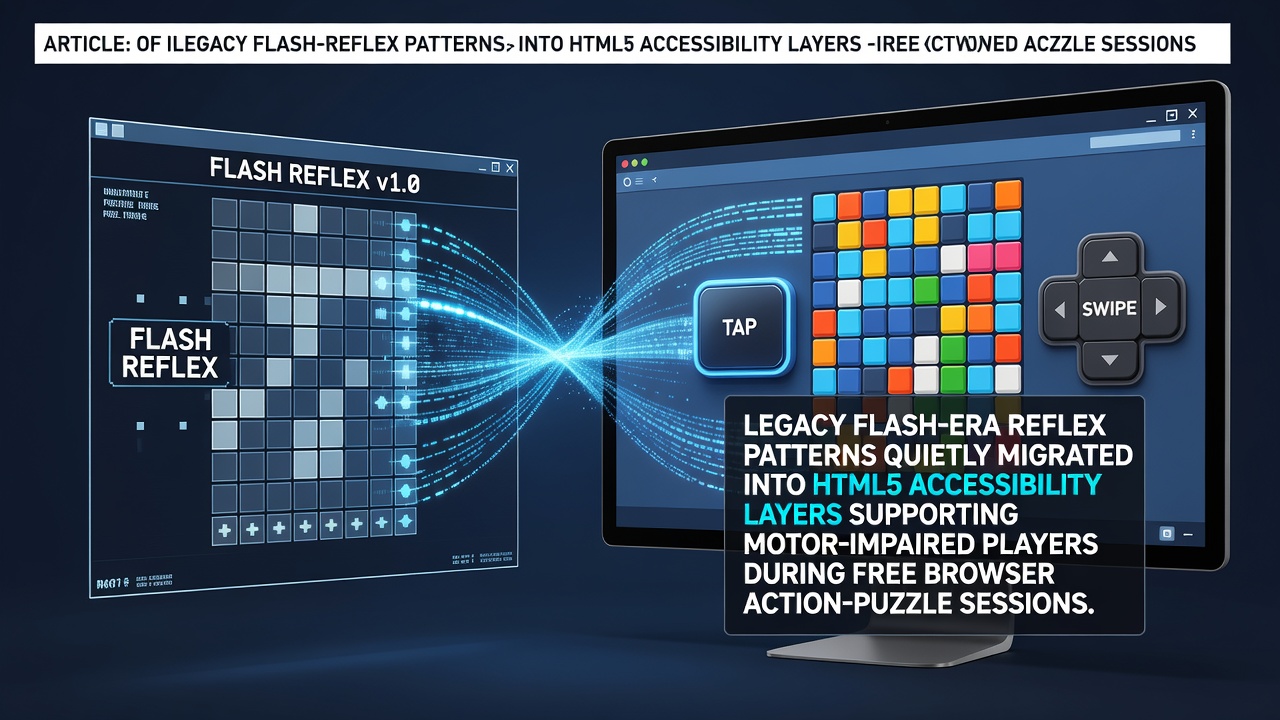
Legacy Flash-Era Reflex Patterns Quietly Migrated into HTML5 Accessibility Layers Supporting Motor-Impaired Players During Free Browser Action-Puzzle Sessions
Flash-era browser games from the early 2000s relied on rapid mouse clicks, timed key presses, and precise cursor movements to drive reflex-based action-puzzle mechanics, and those same input demands have carried forward into HTML5 implementations through canvas rendering and event listeners. Developers preserved core timing loops and collision detection sequences while shifting away from plugin dependencies toward native browser APIs that support keyboard alternatives and adjustable input thresholds.
Tracing Input Patterns from Flash to Canvas
Early Flash titles such as those hosted on portals like Newgrounds and Armor Games used frame-rate synced timers to challenge players with split-second decisions in puzzle sequences mixed with action elements, and HTML5 canvas contexts replicate these loops via requestAnimationFrame while exposing event handlers that allow remapping to single-key or dwell-click systems. Observers note that legacy code patterns for hit detection and velocity calculations now integrate with Web Accessibility Initiative guidelines, enabling motor-impaired users to slow down reflex windows or substitute gesture inputs with sequential button presses.
Studies from research institutions show that many free browser action-puzzle sessions retain the original scoring multipliers tied to reaction speed, yet accessibility layers overlay customizable delay buffers that maintain competitive balance without altering core mechanics. Data indicates these adaptations emerged gradually after the 2015 Flash deprecation announcements, when studios ported thousands of titles and encountered regulatory pressure to meet WCAG 2.1 success criteria for keyboard accessibility.
Accessibility Features Embedded in Reflex Systems
HTML5 game frameworks incorporate ARIA attributes and focus management routines that let screen readers announce puzzle states while players execute timed actions through assistive switches or eye-tracking devices. One documented migration path involves converting Flash's MouseEvent listeners into pointer events combined with gamepad API support, which allows users with limited mobility to trigger reflex sequences using head-mounted pointers or sip-and-puff controls instead of rapid mouse drags.
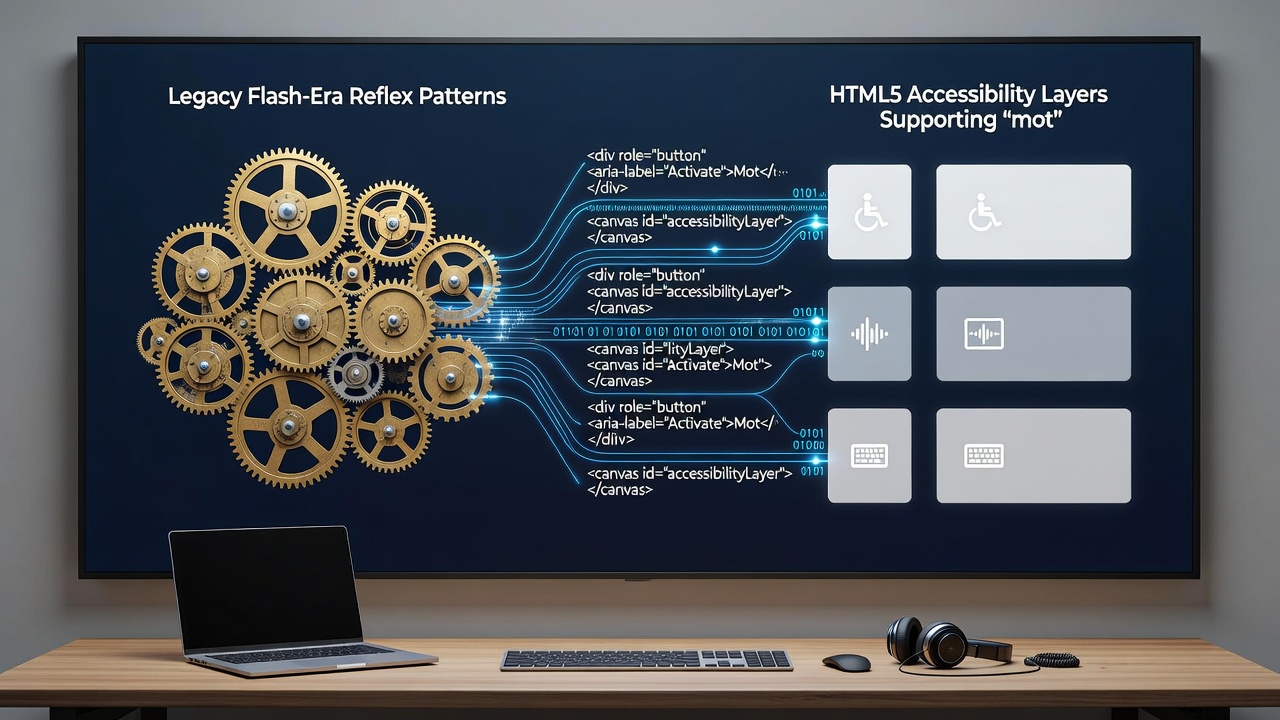
Figures from accessibility audits reveal that by September 2026 several major browser-based platforms had deployed updated canvas layers featuring per-session calibration tools that detect motor input variability and automatically scale reflex windows accordingly. These tools trace directly to Flash-era design choices where fixed frame timings rewarded consistent hand-eye coordination, now reframed as optional parameters within progressive web app manifests.
Industry Standards and Implementation Examples
According to resources published by the W3C Web Accessibility Initiative, HTML5 games can expose timing variables through live regions so assistive technologies receive real-time feedback during action sequences. Industry groups have documented cases where puzzle titles originally built in Flash now offer optional slow-motion modes that preserve scoring logic while extending input acceptance periods from 300 milliseconds to user-defined intervals up to 2000 milliseconds.
Canadian research compiled by the Inclusive Design Research Centre at OCAD University demonstrates how collision algorithms from vintage reflex games integrate with CSS media queries and JavaScript mutation observers, allowing dynamic resizing of interactive zones for players who rely on larger touch targets or voice-activated macros. Those implementations appear in free multiplayer puzzle arenas where group coordination still depends on synchronized reflex responses, yet individual participants can toggle accessibility profiles without disrupting session flow.
Current Developments and Data Trends
Reports compiled through 2026 indicate steady adoption of these migrated patterns across no-install browser environments, with usage analytics showing increased session lengths among motor-impaired demographics once alternative input mappings became standard. European Union directives on digital accessibility have prompted developers to audit legacy timing scripts and replace hardcoded reflex requirements with configurable event throttling that supports diverse motor abilities.
One study revealed that puzzle mechanics relying on chained reactions, originally coded for Flash's vector rendering engine, now run inside WebGL contexts while exposing API hooks for external macro software. This evolution keeps the original challenge structure intact while opening participation to users who previously encountered barriers from rapid or repeated physical inputs.
Conclusion
The migration of Flash-era reflex patterns into HTML5 accessibility layers continues through iterative updates to canvas event systems and integration with assistive technology standards. Data from multiple regional sources shows these changes expand participation in free browser action-puzzle sessions without requiring separate game versions or plugin installations. Ongoing refinements in September 2026 and beyond focus on preserving the original timing-based gameplay while embedding flexible input options that accommodate varying motor capabilities.