From casual clicks to cockpit controls: multiplayer puzzle games honing precision for remote vehicle operators
Avery Schmitt · Oct 3, 2026
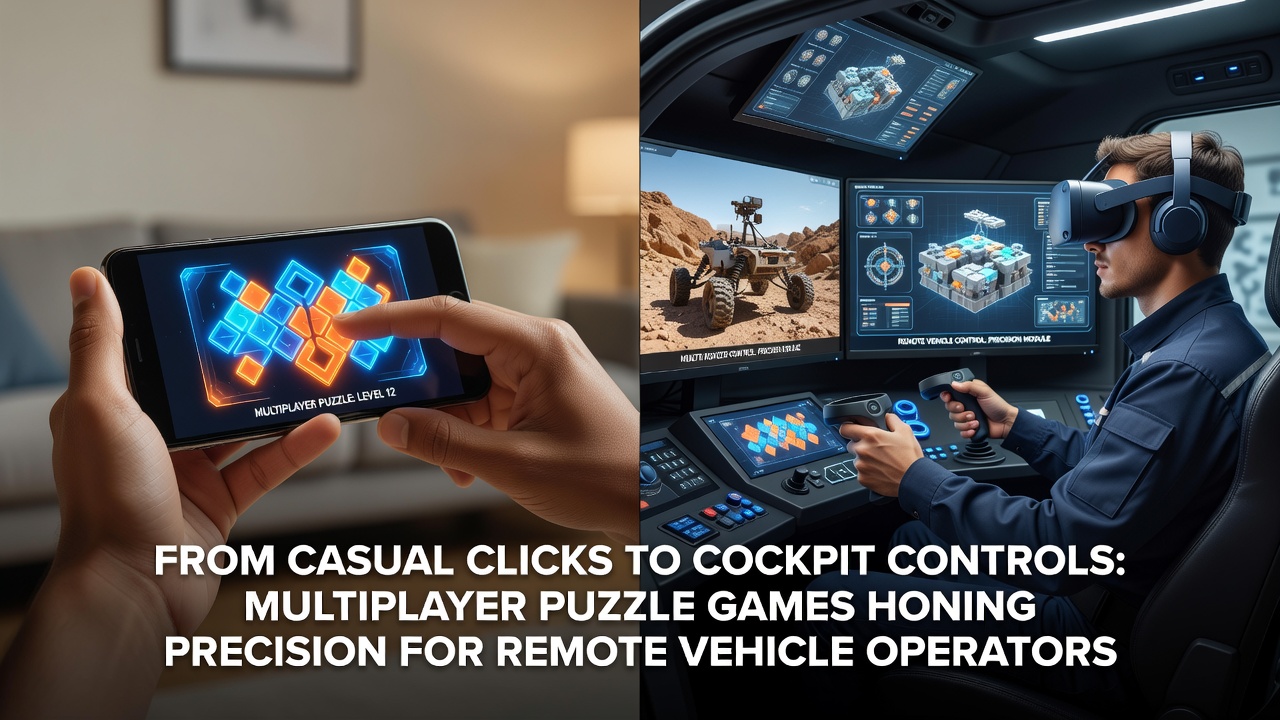
From casual clicks to cockpit controls: multiplayer puzzle games honing precision for remote vehicle operators
Multiplayer puzzle games have expanded beyond entertainment into structured training environments where participants develop fine motor control and spatial reasoning that transfer directly to remote vehicle operations, and data from industry reports shows these platforms simulate the exact coordination demands faced by drone pilots and autonomous system handlers in sectors ranging from logistics to infrastructure inspection.
Precision demands in remote operations
Remote vehicle operators manage aircraft, ground vehicles, and maritime units through digital interfaces that require millisecond-level timing adjustments, continuous trajectory calculations, and rapid response to environmental variables, while researchers at institutions like the University of New South Wales have documented how these tasks mirror the layered decision trees found in cooperative puzzle mechanics where players must align moving elements across shared grids under time pressure.
Training programs now incorporate browser-based multiplayer titles because they replicate the cognitive load of maintaining vehicle stability while interpreting sensor feeds, and figures from the Federal Aviation Administration indicate that certified remote pilots complete an average of 35 hours of simulator practice before qualification, a process increasingly supplemented by game environments that track accuracy metrics in real time.
Skill transfer mechanisms
Studies tracking performance metrics reveal that repeated exposure to puzzle sequences involving synchronized object placement improves hand-eye coordination scores by measurable margins, and participants who engage in these sessions demonstrate faster reaction times when transitioning to actual remote piloting consoles equipped with similar input overlays.
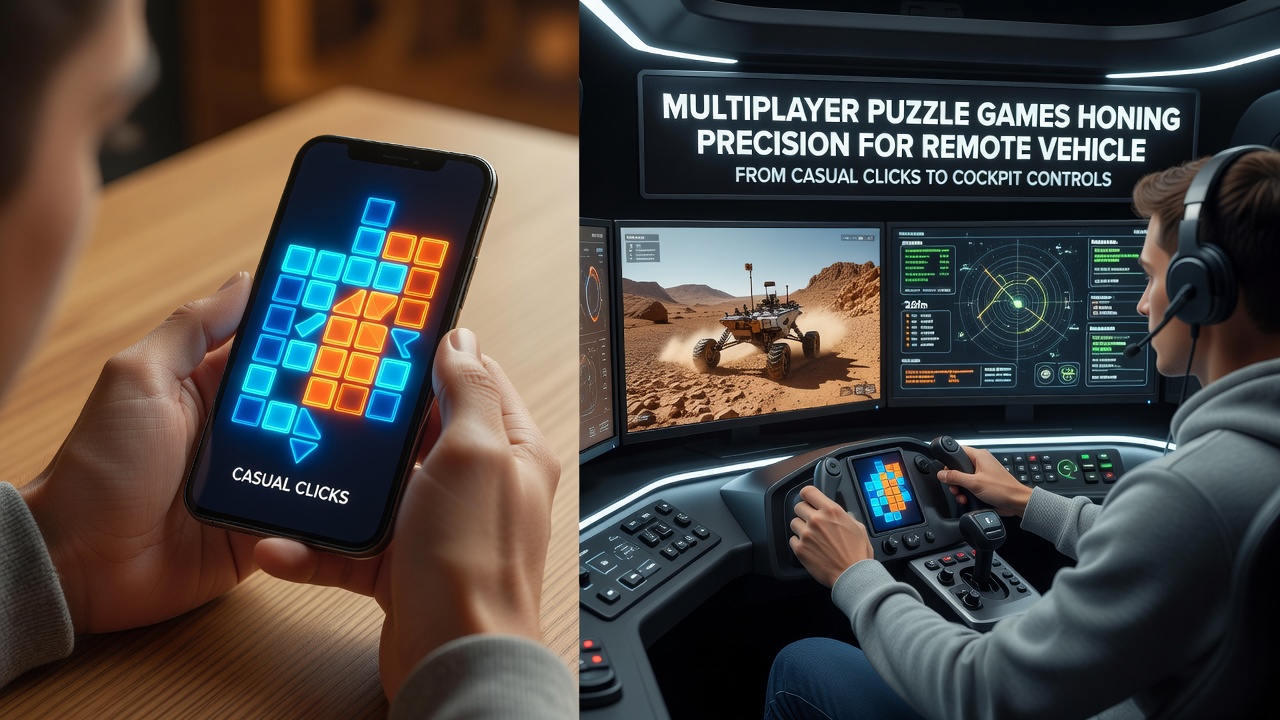
One documented case involved logistics teams in Australia who integrated daily puzzle challenges into pre-shift routines, resulting in reduced error rates during cargo drone deployments where operators must thread vehicles through narrow corridors while accounting for wind vectors and payload shifts, and the same pattern appears in European data where rail inspection crews use collaborative grid puzzles to rehearse camera positioning sequences before field operations.
Multiplayer coordination elements
Group-based puzzle formats introduce communication layers that parallel the handoff protocols used when multiple remote operators share control of a single vehicle during extended missions, and evidence from Canadian transport research centers shows that teams practicing these interactions online exhibit improved verbal clarity and reduced latency when issuing commands in live scenarios.
As of October 2026, several defense contractors began piloting integrated systems that feed puzzle game telemetry directly into operator assessment dashboards, allowing supervisors to correlate in-game accuracy with certification benchmarks issued by bodies such as Transport Canada, and this approach creates continuous feedback loops without requiring dedicated hardware installations.
Current adoption patterns
Industry associations including the Association for Unmanned Vehicle Systems International have noted rising enrollment in game-linked training modules, particularly among operators managing inspection fleets for energy infrastructure where precise camera alignment prevents costly re-flights, and the pattern extends to maritime sectors where puzzle sequences train operators to maintain vessel positioning amid shifting currents and traffic.
Academic analyses continue to map specific game mechanics such as timed alignment tasks and resource allocation puzzles onto operational checklists used in remote vehicle workflows, confirming measurable overlaps in the neural pathways activated during both activities according to neuroimaging data released by research groups in the European Union.
Conclusion
The documented pathways from multiplayer puzzle engagement to enhanced remote vehicle precision rest on overlapping demands for spatial timing, collaborative sequencing, and adaptive response, with ongoing data collection from regulatory and academic sources confirming these connections across multiple operational domains.