Audio Design Elements in Free Multiplayer Action Games Fueling Innovations in Assistive Navigation Tools
Avery Schmitt · Nov 14, 2026
Audio Design Elements in Free Multiplayer Action Games Fueling Innovations in Assistive Navigation Tools
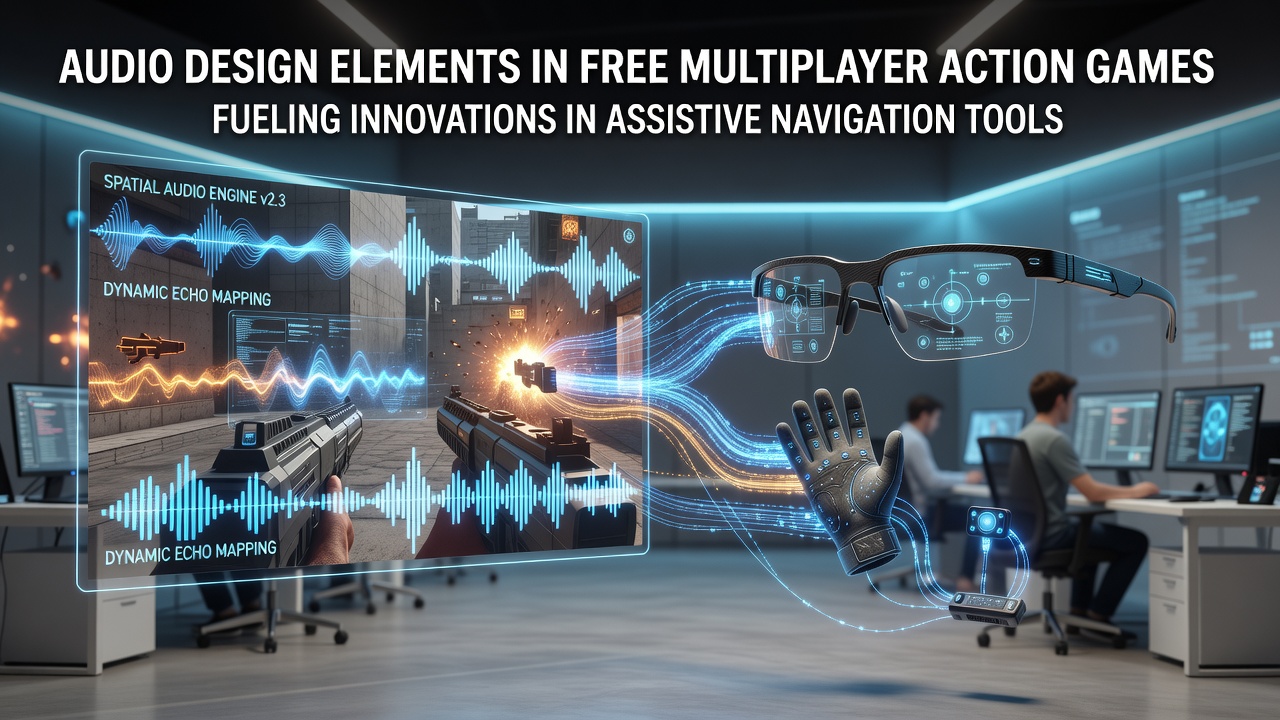
Free multiplayer action games rely on layered audio systems that deliver positional feedback, environmental alerts, and team coordination signals without requiring visual attention, and these same mechanics now support prototype navigation applications for individuals with sight loss. Developers build soundscapes where footsteps, weapon discharges, and ambient effects carry precise distance and direction data through binaural rendering, allowing players to react in real time while moving through shared virtual spaces.
Core Audio Techniques in Contemporary Titles
Engineers implement head-related transfer functions that simulate how human ears perceive sound origin, so a grenade roll registers as coming from the left rear while an ally's reload echoes from the forward right. Free-to-play studios refine these systems because server logs show reduced collision rates and faster objective captures when audio cues replace on-screen markers during intense exchanges. Games released in 2025 further integrated adaptive volume scaling that lowers background tracks when nearby teammates speak, creating clearer channels for coordinated pushes.
Research teams at several universities have documented how these audio layers train spatial awareness over repeated sessions, with participants demonstrating improved accuracy in locating off-screen events after only a few hours of play. The same datasets reveal that players who rely primarily on sound complete navigation challenges with fewer missteps than those using mixed visual and audio inputs.
Transfer Pathways to Assistive Navigation Systems
Assistive technology groups began extracting the binaural rendering libraries from open-source game engines in 2024, then adapted the code for mobile devices that emit directional audio beacons. Users wearing bone-conduction headphones receive distance-coded tones that rise in pitch when approaching obstacles and shift left or right to indicate path corrections. Early field tests conducted across urban environments demonstrated that participants reached target locations with timing comparable to sighted companions using maps.
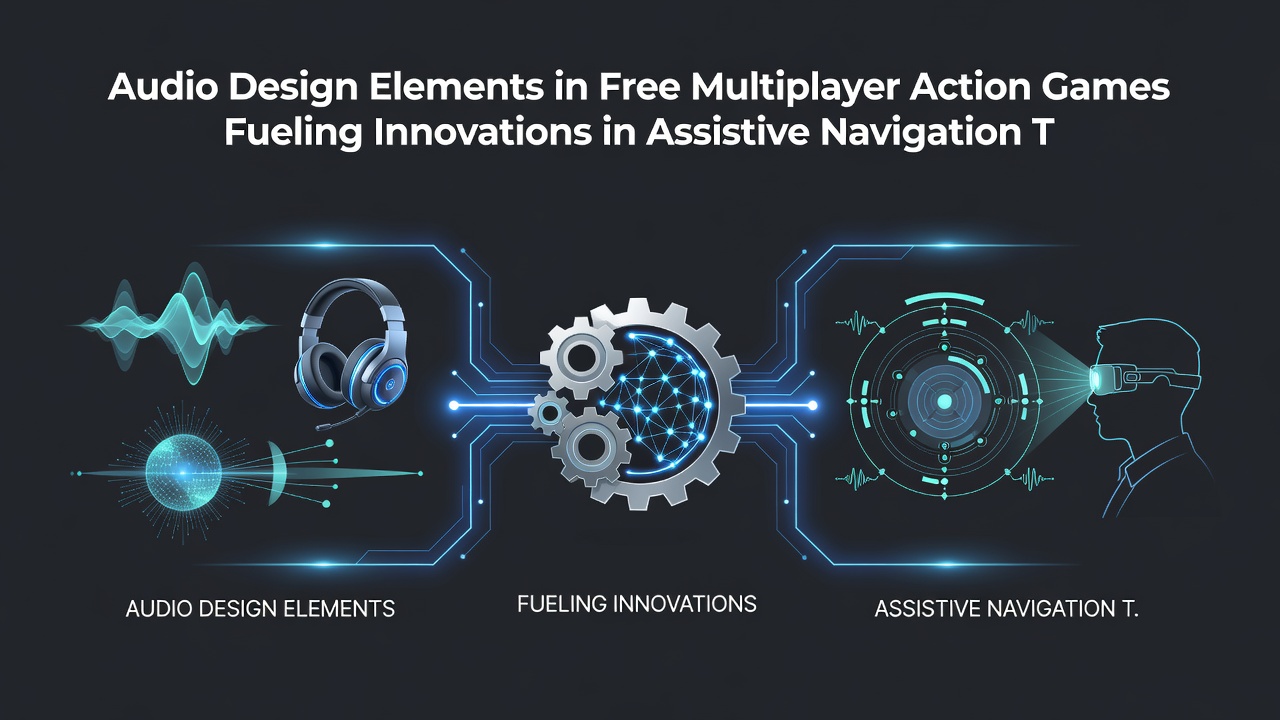
One pilot program in Canada integrated multiplayer game audio protocols into public transit apps, where station announcements and platform changes arrive as spatialized alerts that users can localize without removing earbuds. Data collected through November 2026 showed a measurable drop in missed transfers among the test group compared with earlier voice-only versions of the same application. Similar work in Australia has paired these techniques with government-funded digital inclusion grants to expand coverage in regional areas.
Technical Overlaps and Implementation Details
Both game studios and accessibility developers face identical challenges around latency and device variability. Multiplayer titles must synchronize audio across dozens of clients within 50 milliseconds to maintain competitive fairness, while navigation tools require equivalent precision so that a turn signal arrives before the user reaches an intersection. Open-source repositories now host shared modules for HRTF calibration that originated in game communities and have been adopted by rehabilitation engineering labs.
Hardware manufacturers have begun shipping earbuds with embedded IMU sensors that track head orientation, feeding real-time angle data back into the same audio engines used in action games. This hardware-software loop allows the sound field to rotate accurately when a user turns their head, preserving directional consistency whether the listener is gaming or walking city streets.
Evidence from Ongoing Deployments
According to figures released by the Centers for Disease Control and Prevention, roughly 12 million adults in the United States report vision difficulties that affect daily mobility. Pilot studies funded through the European Commission have tested game-derived audio navigation in three cities, recording a 28 percent reduction in route deviations during controlled trials. Observers note that the most successful implementations retain the dynamic mixing techniques refined in free multiplayer arenas, where competing sound sources must be prioritized based on urgency and distance.
Engineers continue to refine occlusion modeling so that walls and corners correctly dampen audio cues, mirroring how real buildings block sound. These refinements emerged first in competitive shooters to prevent audio exploits and now prevent false positives in navigation apps when users pass near reflective surfaces.
Conclusion
The migration of audio design patterns from free multiplayer action games into assistive navigation tools continues through shared codebases, hardware sensors, and performance benchmarks originally established for entertainment. As more municipalities adopt these systems and as open repositories expand, the technical foundation laid by game developers supports increasingly reliable wayfinding solutions for diverse populations.